





From the Arctic to the Atlantic: A Journey Along Canada’s Remote Shores

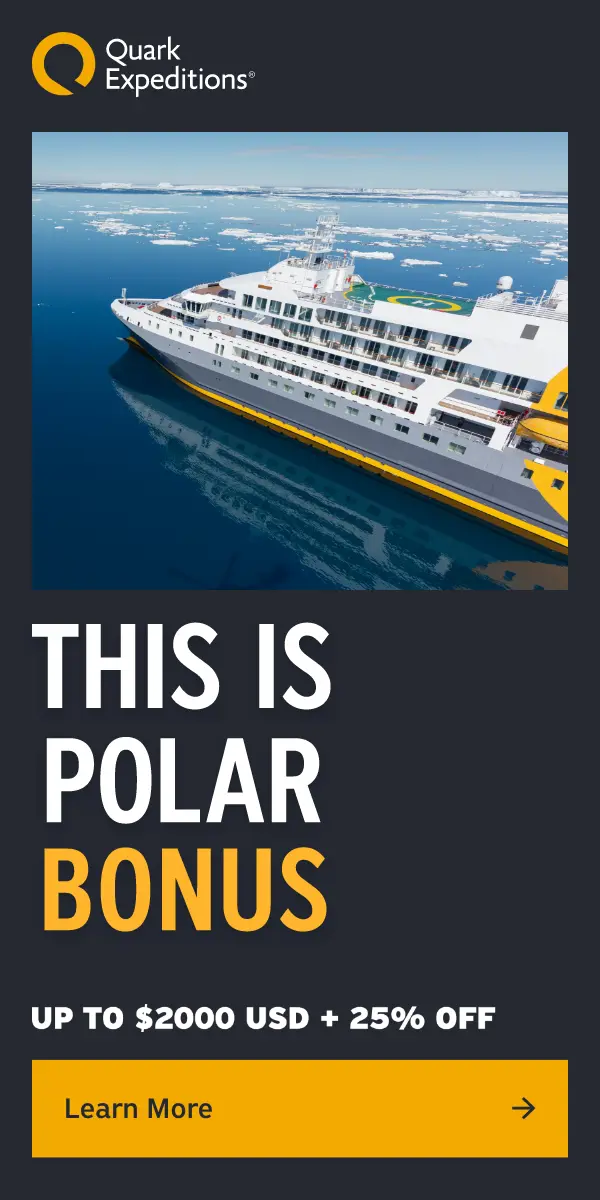
Photo: Quark Expeditions
Baffin Island. Torngat Mountains National Park. The 11th-century Viking ruins at L’Anse aux Meadows, now a UNESCO World Heritage Site. Pangnirtung, a northerly Inuit hamlet known for extraordinary art and dramatic Arctic scenery. And the seldom-visited Red Bay Basque Whaling Station in Labrador.
What do these places have in common? In addition to sharing a sense of remoteness, they are all connected by latitude, history, and they all lie along Canada’s Arctic and North Atlantic edges, where rugged coastlines and deep cultural roots meet—and where travelling by small polar vessel remains the most natural way to experience them.
These destinations are connected by a single 14-day voyage, Quark Expeditions’ Greenland to Newfoundland: Mountains, Wildlife and Viking History. The journey begins with a charter flight from Reykjavík to Kangerlussuaq on Greenland’s west coast, then crosses the Davis Strait to Nunavut. From there, it traces Canada’s eastern Arctic and North Atlantic shores south through Labrador to St. John’s, Newfoundland—following a route shaped by ice, migration, and centuries of human presence.
Traveling this route by small polar vessel unlocks deeper exploration along these remote coasts. With fewer guests—typically between 138 and 199—ships can venture into deep fjords, narrow inlets, and sheltered bays that are beyond the reach of larger vessels. A guide-to-guest ratio of roughly 1:6 encourages active discovery, informed insight, and in-depth learning. Smaller group sizes also enable more thoughtful, unhurried visits to Indigenous communities, fostering respectful engagement without the presence of crowds.
As the voyage moves steadily south, the scenery shifts in striking ways, offering rare opportunities to encounter both Arctic and boreal ecosystems within a single expedition. In the boreal biome, or taiga, cold conifer forests give way to habitats shared by caribou, black bears, red and Arctic foxes, and peregrine falcons. Farther north, the Arctic feels starker and more elemental—treeless landscapes shaped by extreme winters, low-growing mosses and lichens, and wildlife adapted to ice-bound habitats, such as polar bears, seals, and migratory birds.
As the environments change along the route, so too do the human stories tied to them. Cultural encounters are woven into the voyage, especially in Inuit and Nunatsiavut communities across Nunavut and Labrador.
In Nunavut, the journey reaches Pangnirtung, a hamlet at the mouth of Pangnirtung Fjord, where steep mountains rise straight from the sea. Life here moves to rhythms shaped by land, ice, and tradition. A creative stronghold of Inuit culture, Pangnirtung is renowned for graphic art and handwoven textiles that reflect daily life and mythology. A stroll through the community offers quiet moments of connection—and perhaps a Pang toque (knitted hat), a practical keepsake and symbol of local pride.
Farther south, the Torngat Mountains emerge dramatically. Canada’s highest peaks east of the Rockies rise from fjords and tundra in a landscape that feels both ancient and deeply spiritual. At the northern edge of Nunatsiavut, the Inuit homeland of Labrador, these lands have been inhabited for more than 7,500 years. The name Torngat—“place of the spirits”—feels especially fitting as you explore by Zodiac, kayak, or on foot.
In Nain, the administrative heart of Nunatsiavut, culture is embedded everywhere you look. The Illusuak Cultural Centre brings Labrador Inuit heritage to life through art, exhibits, and conversation, while the nearby Moravian Mission, established in 1771, offers a window into centuries of cultural exchange. Time ashore allows for unhurried conversations with locals and the simple pleasure of tasting Arctic char or cloudberries.
Back onboard, the cultural thread continues in a more celebratory manner. Alongside lectures exploring the histories of regions visited, expect evenings full of traditional music from Newfoundland and Labrador. Through performances by Atlantic Canadian musicians, guests discover the roots of the Down East Kitchen Party tradition—lively, communal gatherings that are a mix of stories, humor and songs.
Guests traveling aboard Ultramarine can also book Tundra to Table: Inuit Culinary Experience, hosted by Inuit chefs who are experts in local cuisine. Through thoughtfully prepared dishes from Greenland and Arctic Canada, guests gain deeper insight into Inuit culture, history, and the enduring connection between food, land and people.
For guests, the Canadian Arctic and North Atlantic unfold as a rich tapestry of landscapes, cultures, and shared experiences that will resonate long after the voyage ends.
______________________________________________________________________________
Why travel with us?
Quark Expeditions has been polar-obsessed since 1991, when we became the first operator to bring commercial travelers to the North Pole—and we’ve been leading innovative polar adventures ever since. Polar is all we do—and no other operator can say that. Our expedition team is the most seasoned and respected in the industry, and the largest in polar travel, which allows us to get guests off the ship faster and more often. From Zodiacs and kayaks to helicopters, hiking, camping, biking, and cultural immersion, we offer more ways to explore than anyone else.
Our 14-day Greenland to Newfoundland: Mountains, Wildlife and Viking History has three departure dates:
Arctic 2026 Season: Sept. 14-27, 2026 on Ocean Explorer
Arctic 2027 Season: Sept. 15–28, 2027 on Ocean Explorer
Sept .13–27, 2027 on Ultramarine
An additional Polar Bonus of $1,000 USD is applicable on all three voyages.