



Too Much Information: Why Clarity Is The Travel Advisor’s New Superpower
by Michael Pihach
Michael Pihach. Photo: Benjamin Edward Birch/@benjamin_edward
Among my circle of family and friends – and increasingly, their friends – I’ve become something of the go-to person for vacation advice.
It makes sense. As a travel journalist who spends roughly three-quarters of the year zipping around the world, touring the latest hotels and resorts, flying new routes and experiencing far-flung destinations firsthand, it’s assumed I might know a thing or two.
And, of course, I’m always happy to share my advice.
But I’ve noticed something about the type of questions coming my way lately. People aren’t necessarily struggling to find information about travel. They’re drowning in it.
They’ve Googled the hotel or resort. They’ve watched travel influencers on social media. They’ve read the online reviews. They’ve asked ChatGPT. They’ve saved dozens of Instagram posts. Then a friend tells them about another resort they absolutely have to consider.
And eventually, the question is: “So, what do you think is best?”
That question says a lot about travel today. Researching a vacation – whether it’s a resort, cruise ship or destination – has never been easier.
Travellers have more information, inspiration and opinions at their fingertips than ever before.
Yet deciding what to book – and what truly deserves to be called “the best” – has only become more complicated.
More Options, Harder Decisions
Access to information isn’t the problem. Knowing what to trust, and what to do with it, is.
Travel advisors know this better than anyone.
I remember sitting with a group of advisors at an industry event last year, just as ChatGPT was rapidly becoming part of everyday life. One remarked that their job had essentially turned them into a full-time fact-checker as clients, increasingly, arrived with AI-generated itineraries in hand.
The journalist in me had to chuckle. My first magazine job, 21 years ago (magazines – remember those?) was essentially a full-time fact-checking role. How things come full circle.
I hear this from advisors more and more. Customers have already done their homework across AI, social media and online reviews, often turning to travel professionals for validation.
Some of what they find is legit. Some is outdated.
Some of it lacks context. Sure, you can go to Paris and visit Montmartre, the Louvre, Musée d’Orsay, the Champs-Élysées, the Eiffel Tower summit, take a Seine cruise and visit the Moulin Rouge all in one day. But should you?
And some of it is just wrong. I was once on a cruise assignment with a group of influencers when one started filming a TikTok about how “rocky” the seas were. The individual tilted the camera and swayed dramatically, as if we might not survive the voyage. Meanwhile, in real life, the ship was perfectly stable and the sea was calm. The lies!
I’ve lost count of how many times I’ve seen an Instagram post depicting a popular destination as blissfully devoid of tourists, when the reality is that the very same spot is struggling with overtourism.
So, increasingly, travel advisors become the filter. The fact-checkers. The editors. The person who separates what’s out there from what actually makes sense for the traveller sitting in front of them.
They’re the person who says: Yes, that hotel looks beautiful, but it isn’t right for you because it’s nowhere near the neighbourhoods you actually want to explore.
Or: Don’t take that connection. Or: Spend the money here, save it there.
And occasionally (and this is key): Stop searching. This is the one, and here’s why.
There’s real value in that.
“Clarity is the most underrated travel upgrade”
Lately, we’re seeing Canadian travellers think harder about where their vacation dollars go.
And value doesn’t necessarily mean finding the cheapest trip. It might mean travelling in shoulder season, choosing a better-located hotel, paying for a non-stop flight or taking one spectacular vacation instead of several average ones.
Those are judgement calls. AI can generate 20 hotels in seconds. Google can produce hundreds. Social media can give you another 50 you didn’t know you wanted.
But more options don’t necessarily make the decision easier.
The travel advisor of the future doesn’t win by knowing more than the internet. They win by making sense of it. By turning information into judgment, and possibilities into decisions.
They win by offering clarity.
Luxury travel advisor Adrianna Nuñez, founder and CEO of The Modern Traveller, said it best in a LinkedIn post earlier this year.
“Clarity is the most underrated travel upgrade,” Nuñez wrote. “…When my clients finally take their trip, the thing they comment on the most isn’t the view or the room upgrade. It’s the feeling of relief. The ease of knowing that everything was chosen intentionally, not influenced. The sense that their trip fits them.”
A great advisor can take hundreds of possibilities and narrow them down to three.
A travel advisor who takes the time to understand their client’s wants, passions and needs may know the answer before the client even finishes asking the question.
Travellers have endless resources at their fingertips. What they don’t always have is someone they trust to tell them what actually makes sense.
We’re living in an age of too much information. This is Generation TMI.
Clarity may be a travel advisor’s greatest superpower.
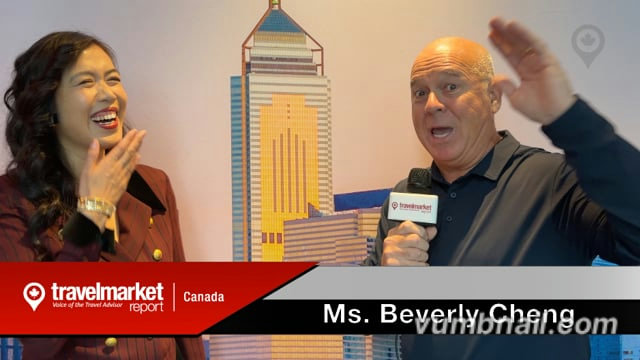
Michael Pihach is Travel Market Report Canada’s new Vice President and Editor-in-Chief.