



HX Expeditions’ Kent Phillips on the Joys Of Purpose-Driven Expedition Travel
by Bruce Parkinson
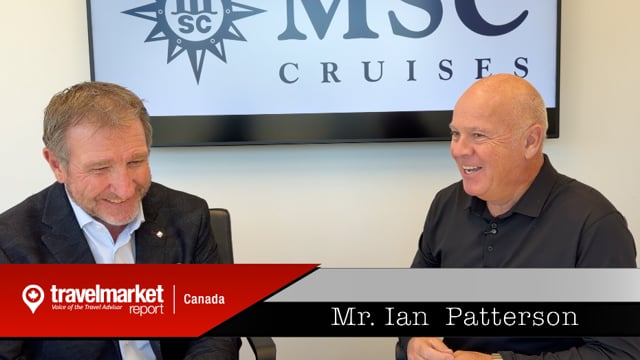
Kent Phillips, Western Canada BDM for Hx Expeditions.
For years, expedition cruising occupied a narrow corner of the travel industry — a rugged niche associated with icebreakers, extreme adventure and a decided lack of creature comforts.
Increasingly, the category is evolving into something broader: a meaningful, educational and values-driven way to explore the world. And in search of a broader market, expedition cruise lines are building ships that offer luxurious comfort as well as the ability to travel in remote, dangerous – and often ice-filled – waters.
“People are looking for travel that changes them,” said Kent Phillips, Western Canada BDM for HX Expeditions. “They don’t just want to consume a destination anymore.”
Travel Market Report Canada sat down for a chat with Phillips during the recent The Travel Agent Next Door conference aboard Celebrity Silhouette.

A Career Based on Aligned Values
Phillips holds a Bachelor’s Degree in Anthropology from the University of Alberta. Early on, he decided to work only for companies that align with his values, which include sustainability and respect for the planet and its people.
He spent nearly eight years with Exodus Adventure Travels, where those values are ingrained, before joining HX Expeditions around the time the brand was launched as a spinoff from Hurtigruten, the 130-year-old Norwegian company that carries passengers, cargo and mail along the coast of that country.
As Hurtigruten planned an ambitious new venture – a premium adventure cruise line specializing in small-ship, immersive travel to the world’s most remote and pristine destinations – new branding was seen as a wise choice, for a couple of reasons.

Hurtigruten’s focus was traditionally more about the scenic beauty of the Norwegian coast and its villages than it was about cuisine and passenger comfort. Not to mention, the name Hurtigruten – which means ‘Fast Route’ in Norwegian, doesn’t exactly roll off the tongue of English speakers.
The decision was to name the company Hurtigruten Expeditions – shortened to HX Expeditions for ease and branding differentiation.
Phillips says it was a wise choice. “No one can say the name. And you can’t market, you can’t brand, especially in North America, if people can’t say your name. At shows in Calgary there was an advisor who always called us the ‘hurdy gurdy’ people.”
Hx Expeditions features a fleet of five ships, carrying between 90 and 490 passengers. By contrast, the ship I interviewed Phillips on, the Celebrity Silhouette, is considered a mid-sized ocean cruise ship, carrying 2,900 passengers at double occupancy, nearly 3,500 if all berths are filled.

An Evolving Definition of Luxury
The expedition market’s growth comes as many advisors report affluent clients are seeking experiences delivering greater depth and emotional resonance. That does not necessarily mean abandoning comfort. Instead, luxury itself is being redefined.
“Luxury doesn’t always mean butlers, helicopters and caviar,” Phillips said. “For many travellers now, luxury means access, authenticity and learning.”
That distinction is becoming more important as premium and luxury cruise brands compete for travellers less interested in conspicuous consumption and more in impactful experiences.
As consumers change, so do advisors. Many who historically concentrated on price-driven sun vacations and mass-market cruising, are now expanding into expedition products, safaris and immersive cultural travel. Phillips says that once advisors experience the product firsthand through FAMs or ship tours, conversion rates often rise significantly.
“There’s still a misconception that expedition cruising is only for hardcore adventurers,” Phillips said. “But once agents see the ships and experience it themselves, they understand the appeal immediately.”

Sustainability Under Scrutiny
As well as seeking more meaningful experiences, Phillips says many travellers are conscious of and concerned about the impacts of their travel. They expect companies to demonstrate measurable commitments to sustainability, not just marketing slogans.
“People want to spend their money with companies that are actually doing the work, not just talking about it,” Phillips said.
Phillips says HX Expeditions stands out in this area, thanks to greater operational transparency, including publicly available ESG reporting and investments in hybrid technology, science programming and conservation partnerships.
Science At Sea
Rather than treating enrichment as a secondary activity, HX Expeditions makes research and citizen science central to the product. Its ships feature dedicated science centres, onboard researchers and interactive programming that allows guests to participate directly in data collection.
Passengers may help identify whales through photographic databases, collect plankton samples alongside scientists or participate in glacier monitoring projects during zodiac excursions.
“They become participants instead of just tourists,” Phillips said. “That changes how people see these places.”

Indigenous Voices And Arctic Tourism
The Arctic is emerging as one of the most important — and sensitive — frontiers in expedition travel.
As Greenland and Arctic Canada attract growing tourism interest, Phillips says tourism development with strong respect for indigenous people is becoming essential to the region’s future.
Historically, Arctic tourism was presented through an outside, largely European lens. Increasingly however, Inuit communities are taking a more active role in shaping visitor experiences, storytelling and tourism planning.
“There’s always been concern about companies coming in and dictating the narrative instead of listening,” Phillips said. “Now there’s a much stronger push for local voices to lead those conversations.”
He adds that travellers are responding strongly to experiences grounded in authentic community engagement and cultural exchange rather than staged presentations or superficial encounters.
The Power Of Storytelling
Perhaps the clearest message emerging from the expedition sector is that storytelling matters more than ever.
Phillips says he’s noticed that advisors and consumers alike are increasingly drawn to emotional narratives and personal transformation rather than traditional product presentations.
“People remember stories,” he said. “They don’t remember product presentations.”