




Being a Travel Agent in the Age of Terrorism: Part I, An Introduction
by Paul RudenEveryone is familiar with the historical periods like the Stone Age and the Information Age. Ironically and tragically, it seems clear that today we are in the Age of Terrorism.
From the standpoint of the business of travel agents, it does not matter how terrorism is labeled or what its source of inspiration is. From every legal, practical, and moral viewpoint, it is a mistake to disregard the reality of our clients’ exposure to these forces. The threat is universal and will not abate any time soon.
It is also true that the odds of injury from terrorism are, and likely will remain, very small. Data show that the risks are far greater from automobile accidents, drowning, or lightning strikes. Of course, statistics are cold comfort when we are confronted with the television and social media displays of the carnage from a terrorism event. Terrorism seems larger than it is because it is so extraordinary, irrational, and damaging, and we see and hear about it around the clock. This does not mean that travel agents can ignore it, but it does mean that the reaction to it should be measured and coherent — consistent with reality rather than driven by fear.
The question really is: How does the specter of terrorism change how we conduct our business? The answer requires that we understand our obligations, and that we acquire and use the available tools to help us perform those duties. If you hold yourself out as an expert — a travel professional — you must conduct your business in line with that claim. You must also assure that your staff is sensitized to agency’s obligations to each client whose travel you facilitate, and adequately trained to do what is required every time.
This is a serious subject and we will consider it in a series of articles, beginning with the concept of fiduciary responsibility. Courts have found that travel agents are fiduciaries in relation to their customers. Fiduciary responsibility involves an extremely high degree of trust and an obligation to act in the interest of the principal, in your case the traveler, ahead of your own interests. Bank trust officers and estate administrators are examples of fiduciaries under American law. So are attorneys.
Being a fiduciary does not mean that a travel agent is a guarantor of a perfect travel experience. It is not reasonable to expect travel agents to be able to protect clients from terrorism. Nor does it obligate an agent to try to talk a client out of going to a particular place. Paris comes to mind.
But it does involve requirements, and in this series we will explore what is required of you. We will elaborate on the subject of fiduciary responsibility of travel agents with regard to terrorism risk issues and discuss the State Department’s Smart Traveler Enrollment Program and other tools that can efficiently help you fulfill your obligations to your clients.
In the extremely unlikely event that your clients’ plans are disrupted during a trip you arranged, you may become a major link in communications between that person and family or employer. This circumstance requires some planning to incorporate processes into the agency workflow to assure that you can deal with these responsibilities when and if the need arises. These also will be very useful in less severe situations, such as health issues that may arise on a trip.
In the meantime, I suggest you abide by a few simple principles. First, inform yourself. In the Information Age, no travel agent can operate in ignorance of what is going on around the world. It is, however, unwise to assume that your client is equally well-informed. Second, think deeply about what you, if you were a novice traveler, would want to know before making a travel commitment. And, finally, consider who should be informed of your travel plans.
Addressing a subject like terrorism risk must, of course, be approached with care. You want to help clients protect themselves, not suggest that you think they are headed into danger. You will not be able to make such judgments reliably and, in the end, the decision of where to go, and when, must be the decision of the well-informed traveler. This is where your good client communication skills will be essential. More on that in later installments too.
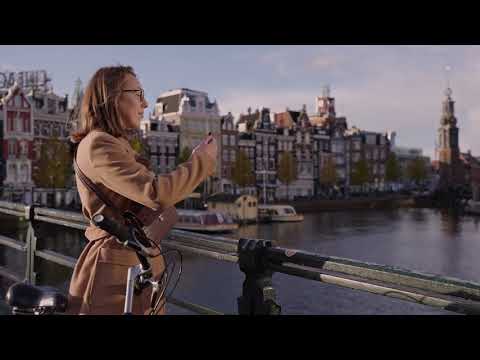
Pic: N i c o l a